Posted on February 8th, 2012 by Editor
I’ve been postponing redesign of our badly outdated site during last 5 years. Gradually I grew accustomed to a thought that maybe our circa 90s looking site has its merits? Like, it looks like made by people who are good in their own field but have no time/resources to devote to making more modern version of the site? At least it doesn’t look anything like a cheap template based one.
But we do care about the site and from time to time update it – we do update current fees, and do update certain pages once range of our services shifts somewhere. For instance, recently two pages were quite radically edited – in pursuet of more clear message and such. These are:
Page “Trademark registration services in Russia”
and
Page devoted to Document delivery service – now it says “Document delivery vendor, source for Russian, European, Turkish etc articles”.
As I’ve just mentioned in Facebook, I’d better set up a page that is not named “Russian document retrieval servic…e” – we went well beyond Russia centered services and got heavily occipied with other countries – say, more than 2/3 of all delivered articles, thesises, dissertations and conference proceedings were for Eastern European (like Czech, Polish, Hungarian, Romanian, Bulgarian, Slovakian, Slovenian, Macedonian, Croatian, Serbian etc.) and Turkish ones.
Filed under: document detective service, Trademark registration in Russia | No Comments »
Posted on April 4th, 2011 by Editor
I witness steady growth of fashion apparel companies among our prospective clients who turn to us seeking help in registering trademark in Russia – just recently they were a knitwear designer from NY and absolutely fabulous British based clothing company (which made me regret I’m way to bulky nowadays to wear their suits – my only bet would be a t-shirt…sigh…)
In the light of the above, an article in The Economist was fun to read.
As Carl Oppedahl of e-trademarks-l nicely summarized it:
“DESIGNERS of fancy apparel would like their customers to believe that wearing their creations lends an air of wealth, sophistication and high status. And it does—but not, perhaps, for the reason those designers might like to believe, namely their inherent creative genius. A new piece of research confirms what many, not least in the marketing departments of fashion houses, will long have suspected: that it is not the design itself that counts, but the label.”
I couldn’t say it better in English.
BTW, guys at The Economist produce absolutely fascinating wall calendars – check them out! I got mine in the post couple of weeks ago and it keeps me amused ever since – so much fun to study all those tiny details, it’s always sets me in positive mood 🙂

Filed under: facts of life, registration of trade marks in Russia | No Comments »
Posted on March 27th, 2011 by Editor
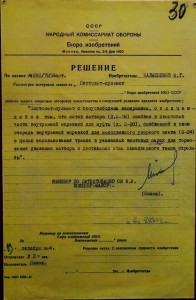
Once in a while we happen to receive an inquiry for an old Russian patent (or rather Author’s certificate as it used to be known back in USSR days) which does not come up in the list of official patents published in Russian patent office database.
As a rule, the reason is that this very document is classified: patent was granted and it even gets mentioned somewhere (once people happen to find it), but it cannot be retrieved due to being classified.
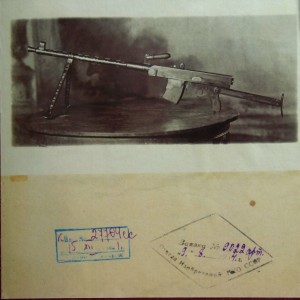
I saw quite nice example of such a classified patent today while visiting with my 7 yrs old kid Mikhail Kalashnikov’s museum in the city of Izhevsk, Russia. Kalashnikov got a classified patent for submachine gun – actually, that was just a prototype of AK-47, or even prototype of some vital parts later used in the design.
Filed under: russian patents | No Comments »